 EN
EN  CA
CA  ES
ES 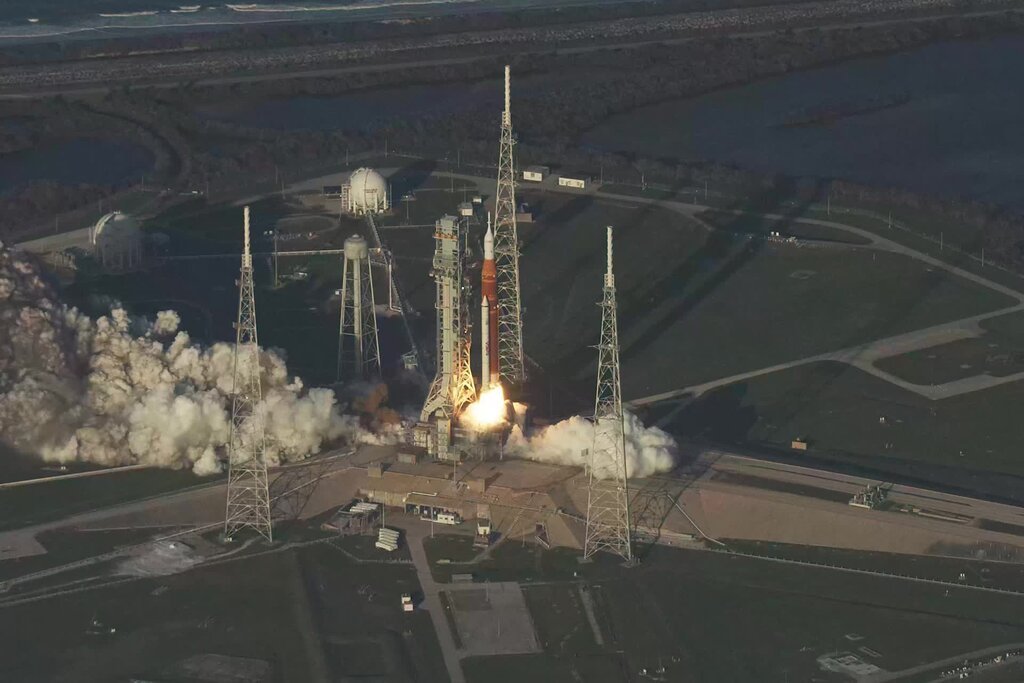
These days, the Artemis II mission makes us look at the Moon again. The real-time tracking of a manned mission beyond low Earth orbit puts images, data and explanations into circulation that reach directly the media and, potentially, also the classrooms.
Humans haven't traveled this far in over fifty years. Artemis II It represents a step in the return to lunar exploration with a crew orbiting the Moon and validating systems needed for future missions. Behind this process are decades of research, technological development, and coordination between different agencies and teams.
So, how do we integrate current scientific news into the classroom in a meaningful way?
But the most interesting thing doesn't just happen in space. It happens here, in the classrooms. That is why we think it is important to know and explain rigorously what the mission consists of as a pedagogical opportunity of the first order, transforming interest into learning, and learning into vocation.
When current events become an educational context
Space missions have historically had a double dimension: scientific and symbolic. If during the Cold War the space race represented geopolitical power, today programs like Artemis allow us to introduce this perspective through different dimensions. Cooperation between agencies like NASA and the European Space Agency, the development of infrastructures such as the European service module or the management of missions in environments of high technological complexity are part of the same system.
Incorporating this type of content into the classroom implies expanding the questions that are raised. Why are lunar missions being resumed now? What role do the different actors involved play? What implications does space exploration have in scientific, economic and social terms?
Working on Artemis from this perspective allows us to develop a scientific literacy which goes beyond technical knowledge, analytical capacity, personal judgment and understanding of complex systems.
From abstract concepts to real problems
One of the challenges in teaching STEM disciplines is the gap between content and application. Concepts such as orbit, gravity, energy or radiation are often presented in a decontextualized way.
The context of Artemis allows us to approach these concepts from an applied perspective. Orbital maneuvers, life support systems or communication with the spacecraft during the passage through the dark side of the Moon allow us to work on physics, biology, engineering and technology based on a real case. Knowledge ceases to be an accumulation of content and becomes a tool for understanding and solving problems.
Many of the technologies developed to solve extreme space challenges have become part of our daily lives:
- Them image sensors that we find today in a large part of the mobile phone cameras They have their origin in the need to miniaturize equipment for space missions.
- Materials such as viscoelastic foam, initially designed to absorb impacts in astronaut seats, are used today in mattresses and hospital environmentss.
- Them infrared thermometers, common in the healthcare field, derive from technologies designed to measure radiation from distant stars.
- Glasses with UV protection or cordless vacuum cleaners have direct connections to space research.
References, identity and vocation
The generation of scientific vocations It is linked to referents. Seeing who does science influences the perception of who can participate in it.
Artemis II incorporates a crew with diverse profiles. It participates Christina Koch, engineer and NASA astronaut, first woman to be part of a manned mission around the Moon. She also participates in Victor Glover, pilot and astronaut, first racialized person to travel to the lunar environment.
They complete the crew. Reid Wiseman, mission commander, and Jeremy Hansen, Canadian Space Agency astronaut.
Research in science education indicates that the lack of role models is a barrier, especially for girls and other underrepresented groups. Representation affects expectations and the projection towards scientific studies and careers.
The spatial dimension in the classroom
A space mission integrates multiple disciplines that work in a coordinated manner. Physics, engineering, biology and technology intervene interdependently to make each phase of the mission possible.
This characteristic makes it a useful pedagogical tool for working on transversal skills:
- Understanding complex systems
- Interdependence between disciplines
- Decision-making in environments of uncertainty
- Collaborative work
Artemis provides a real and current context to address these contents and skills from an applied perspective.
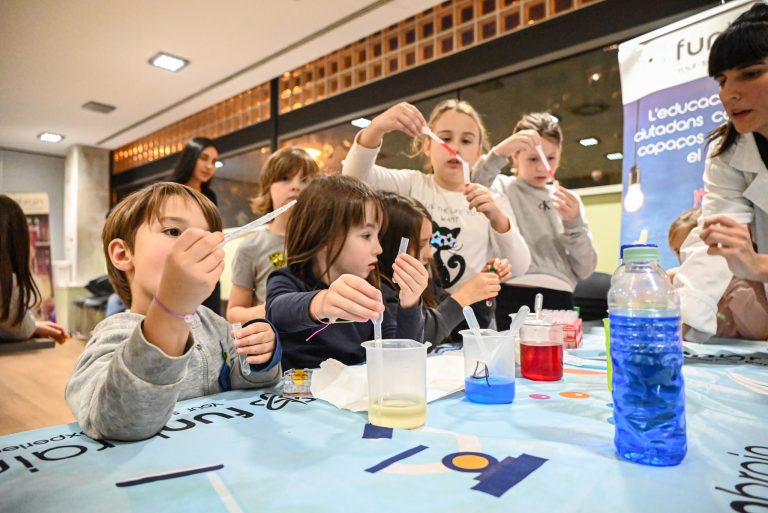
At Funbrain we work on this connection between scientific news and education through specific proposals such as:
- The solar system: engages students through understand the logic of space missions, orbital movements and system organization, connecting abstract concepts with real cases such as Artemis.
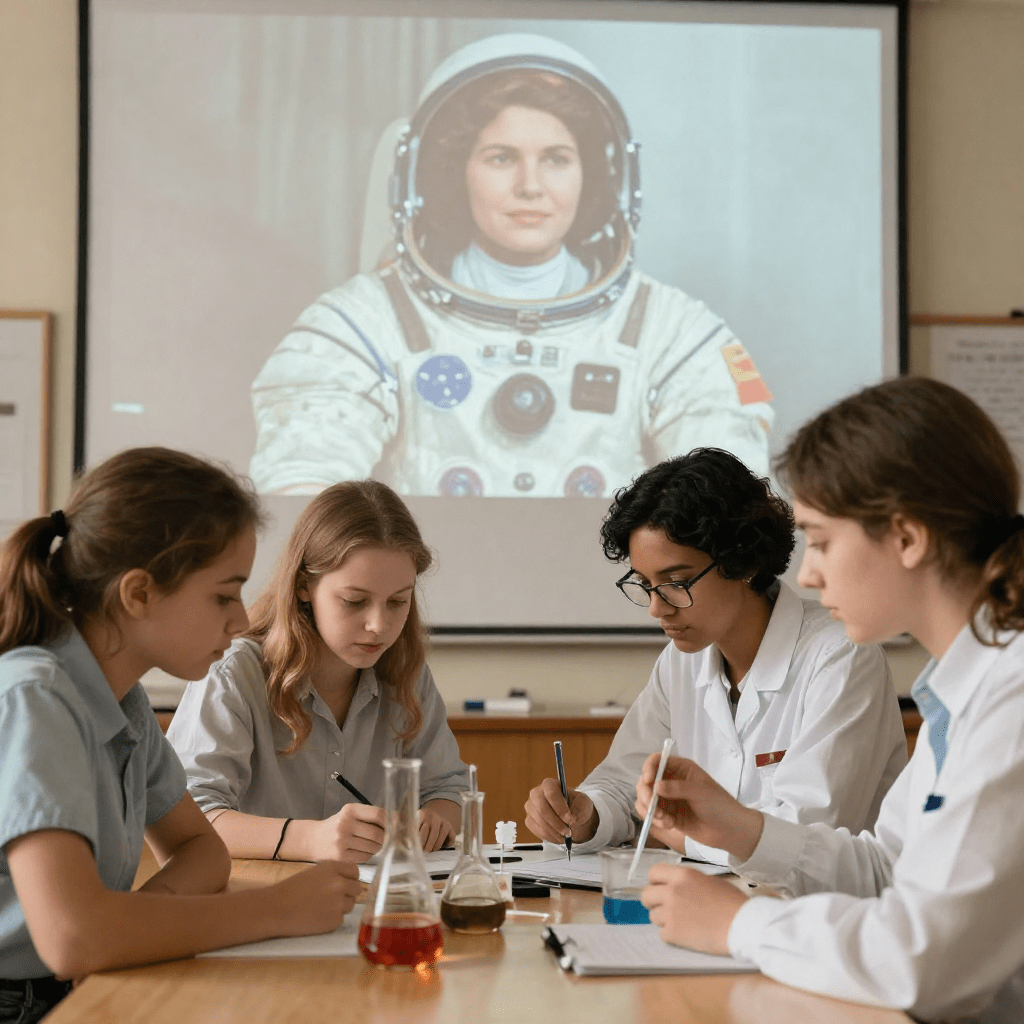
- Science is written in feminine form: It addresses the social dimension of science, working with references, breaking stereotypes and promoting scientific vocations with an inclusive perspective.
Educational proposals seek activate skills such as curiosity, critical thinking and the ability to interpret the world. Also with personalized and individualized experiences according to the school curriculum.
The science that is happening now
In a context marked by the rapidity of scientific and technological changes (artificial intelligence, climate crisis, global health, energy transition), education cannot remain disconnected from current events. Integrating these topics into the classroom is not an option, but a necessity.
Artemis is a clear example of how a scientific event can act as an educational trigger. But the challenge is to systematize this approach: to turn every major current issue into a learning opportunity.
This challenge is not just educational. It is also social. The way we understand science, how we communicate it, and how we incorporate it into decision-making affects society as a whole: from schools to organizations and institutions. Are we able to transform this moment into a meaningful educational experience? Can we use the science that is happening now to build the skills we will need tomorrow?
To Funbrain we work to make it possible connecting current events and education to awaken vocations, form critical thinking and bring science closer to society. Because the future of space exploration isIt is also built in each classroom.
If you want to bring this type of proposal to your environment —whether educational, institutional or organizational— we can help you adapt them to your context.